

Online gaming has surged in popularity thanks to better technology, widespread internet access, and a growing number of gaming platforms. It has broken down geographical barriers and attracted a diverse global audience, becoming a major cultural phenomenon.
This article will explore various aspects of online gaming, including key statistics, player demographics, popular game genres, and its influence on social interaction, well-being, and education.
Key Takeaways
- Global Revenue: The online gaming market is projected to hit $225.7 billion in 2025.
- Players Worldwide: The global number of gamers is expected to reach 3.32 billion in 2024.
- Platform Lead: Mobile gaming is the dominant platform for digital play.
- Esports Revenue: The esports market is forecasted to grow to $3.3 billion in 2025.
- Average Play Time: The average gamer plays for about 7.6 hours per week.
What is the state of the online gaming industry?
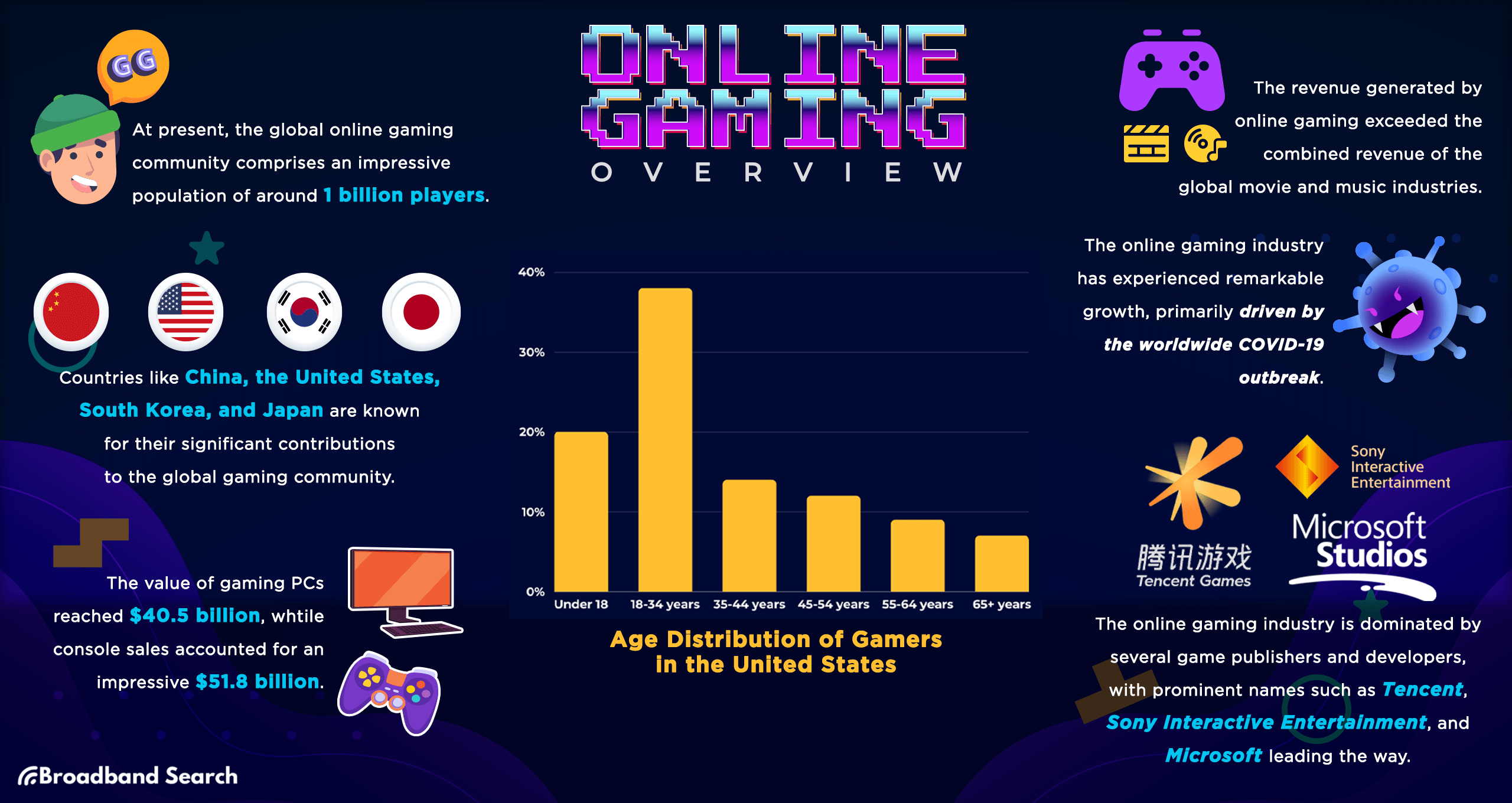
The online gaming industry has seen remarkable growth since 2019, accelerated by the COVID-19 pandemic as people sought digital entertainment and new ways to connect. This expansion was driven by online gaming's immersive and social experiences, which captivated a broad audience. According to Precedence Research, the global market reached an estimated $204.63 billion in 2022 and is projected to hit approximately $440.89 billion by 2032.
How much revenue does the online gaming industry generate?
The global online gaming industry is expected to generate $225.7 billion in revenue in 2025, according to SQ Magazine. Of that total, $171.6 billion will come from digital in-game spending. Free-to-play games are projected to generate $92 billion, with in-game advertising contributing around $18.4 billion.
How many gamers are there worldwide?
There are an estimated 3.32 billion gamers worldwide in 2024 across PC, console, and mobile platforms. This number reflects a significant increase of over one billion gamers in just seven years. China, South Korea, and Japan have the highest online gaming penetration rates.
How has the gaming industry grown?
The gaming industry is growing at a compound annual growth rate (CAGR) of 7.97% and is projected to surpass $257 billion in value by the end of the year, as noted by Precedence Research. Key drivers of this growth include the rise of cloud gaming, increased mobile usage, and the expansion of 5G networks. While the industry’s explosive growth has slowed since its pandemic peak, it has settled into a steady pace of 3–4% annual growth since 2024. As smartphones become more powerful, mobile games have grown more sophisticated, creating new opportunities and making gaming more convenient for players.
Who are the major players in the industry?
The major companies in the online gaming industry include Tencent, Sony, Microsoft, Nintendo, Activision Blizzard, and NetEase, according to GlobeNewswire. Tencent is the industry leader in revenue, holding a dominant position in Asia through aggressive global investments in over 800 companies.
What are the demographics of online gamers?
Gaming attracts a diverse range of age groups, with the highest concentration among young adults and adolescents.
Gamer Demographics by Age and Gender
Age GroupPercentage of Players (US)Under 1824%18–3436%35–4414%45–5412%55–649%65+6–7% GenderPercentage of Players (US)Male54%Female46% Sources: DemandSage
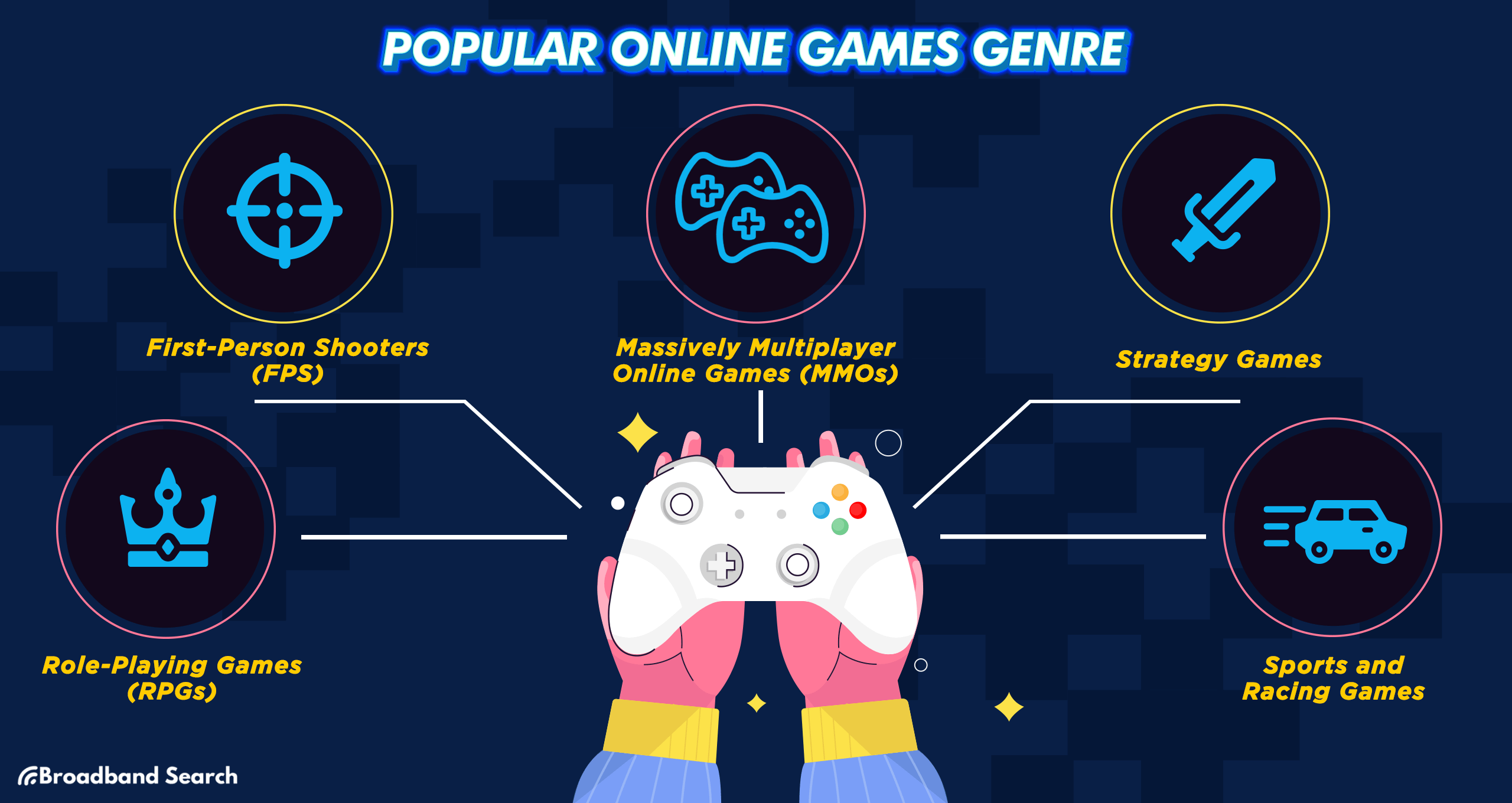
Gaming preferences often vary by age and gender. Younger players tend to prefer action-oriented genres like first-person shooters, while older groups may lean toward strategy and puzzle games. Similarly, males often gravitate towards action and sports games, whereas females show a greater interest in role-playing, simulation, and puzzle games.
Over time, the number of older gamers has noticeably increased, indicating that gaming is becoming more accepted and accessible across all age groups. The industry is also actively working to foster greater gender diversity and inclusivity by creating more welcoming environments and developing games that appeal to diverse identities.
Where are online gamers located geographically?
Online gaming is a global activity, but certain regions stand out as hot spots. The Asia-Pacific region, North America, and Europe are key hubs for gaming engagement.
RegionNumber of GamersAsia1.48 billionEurope715 millionLatin America420 millionNorth America285 million Source: DemandSage
Cultural factors often lead to different gaming preferences. For example, mobile gaming is extremely popular in many Asian countries, while console gaming is more dominant in others. Regional factors like internet infrastructure and gaming regulations also influence gaming behaviors, with countries that have advanced connectivity and supportive ecosystems typically showing higher engagement.
Which gaming platforms are most popular?
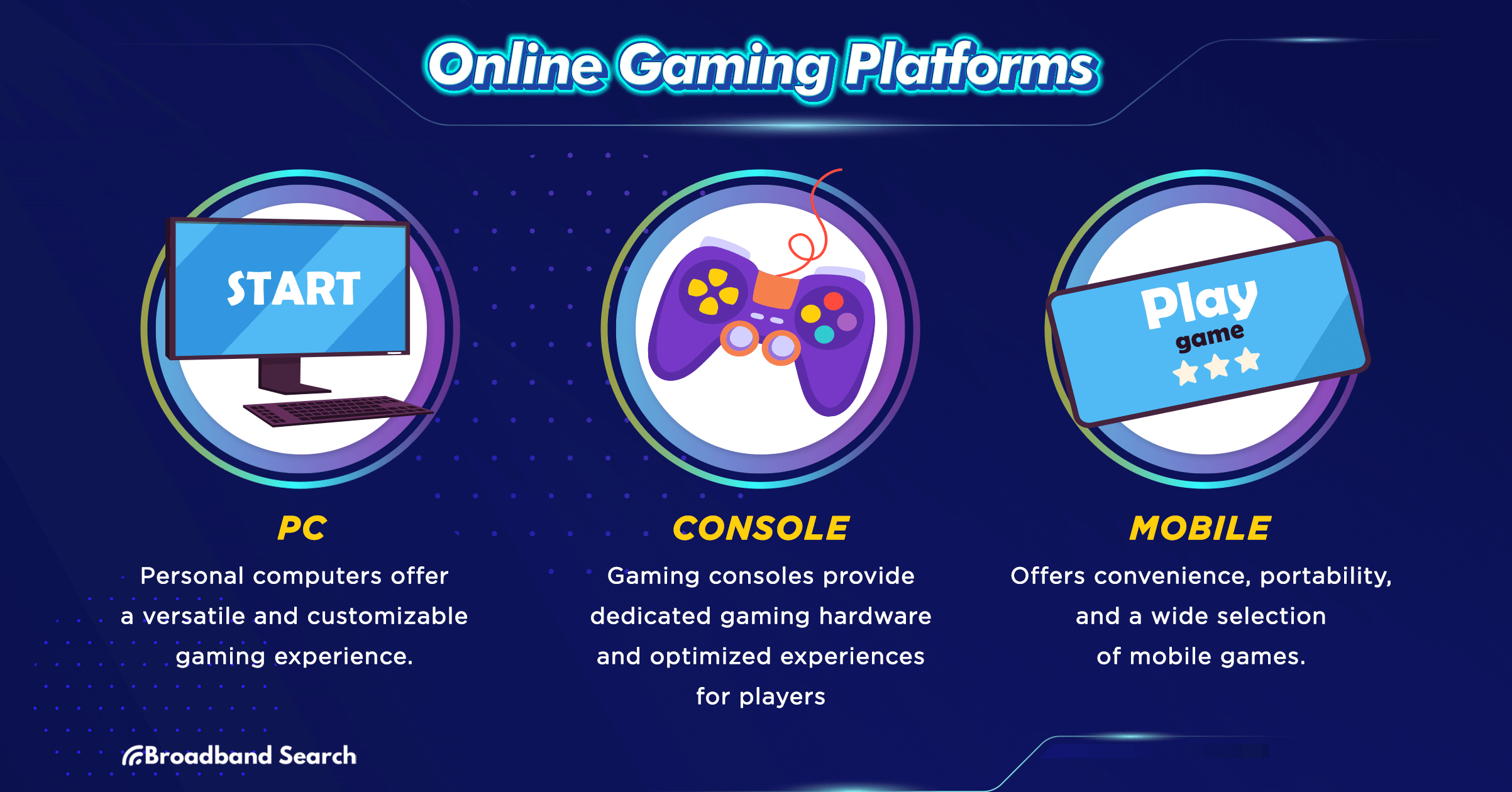
Online gaming platforms can be broadly categorized into PC, console, and mobile. Each offers a unique experience with its own set of advantages and disadvantages.
PlatformMarket Share (2022)Key FeaturesConsole$51.8 billionPlug-and-play convenience, optimized experience, exclusive titles.PC$40.5 billionPowerful hardware, customizable, vast game library.Mobile$61.7 billionPortable, easy to use, wide selection of casual games. Sources: Uswitch
The Evolution of Gaming Platforms
Gaming has evolved dramatically from its early days. In 1982, the CVC GameLine allowed players to download games via telephone lines—an idea ahead of its time. The real shift began in the early 1990s with 16-bit consoles and the Internet's public rollout, paving the way for modern online gaming. As the internet and mobile devices became widespread, gaming grew into a multibillion-dollar industry. Microsoft’s Xbox Live (2001) set a new standard for online connectivity, and World of Warcraft (2004) redefined multiplayer gaming, attracting 14 million subscribers at its peak. From dial-up downloads to massive online worlds, gaming platforms have continuously evolved, offering richer gameplay and more connected communities.
What is cross-platform gaming?
Cross-platform gaming allows players on different devices—PC, console, or mobile—to join the same matches, creating larger, more connected communities. Interoperability takes this a step further, letting players carry their progress, purchases, and achievements across devices seamlessly. In Web3 gaming, interoperability is even more advanced, as assets and characters can move between different games, giving players true ownership and creative freedom. Together, these features are breaking down barriers and giving gamers more control than ever.
What are the emerging trends in gaming platforms?
- Mobile: Mobile gaming now dominates the digital landscape, offering distinct, touch-based experiences. Its casual nature and broad accessibility have made it the most popular platform for play.
- Cross-Platform: Cross-play is now a standard expectation, with major titles like Call of Duty: Warzone 2.0 and Fortnite leading the charge. Most new AAA multiplayer games now include at least partial cross-platform support.
- Cloud Gaming: Cloud gaming streams games over the internet, eliminating the need for expensive hardware. This allows gamers to play on various devices as long as they have a stable internet connection.
- AR and VR: Augmented and virtual reality are transforming gaming into a more social and immersive experience. Players can connect in virtual worlds, making gaming more mobile and interactive.
How much time do people spend gaming?
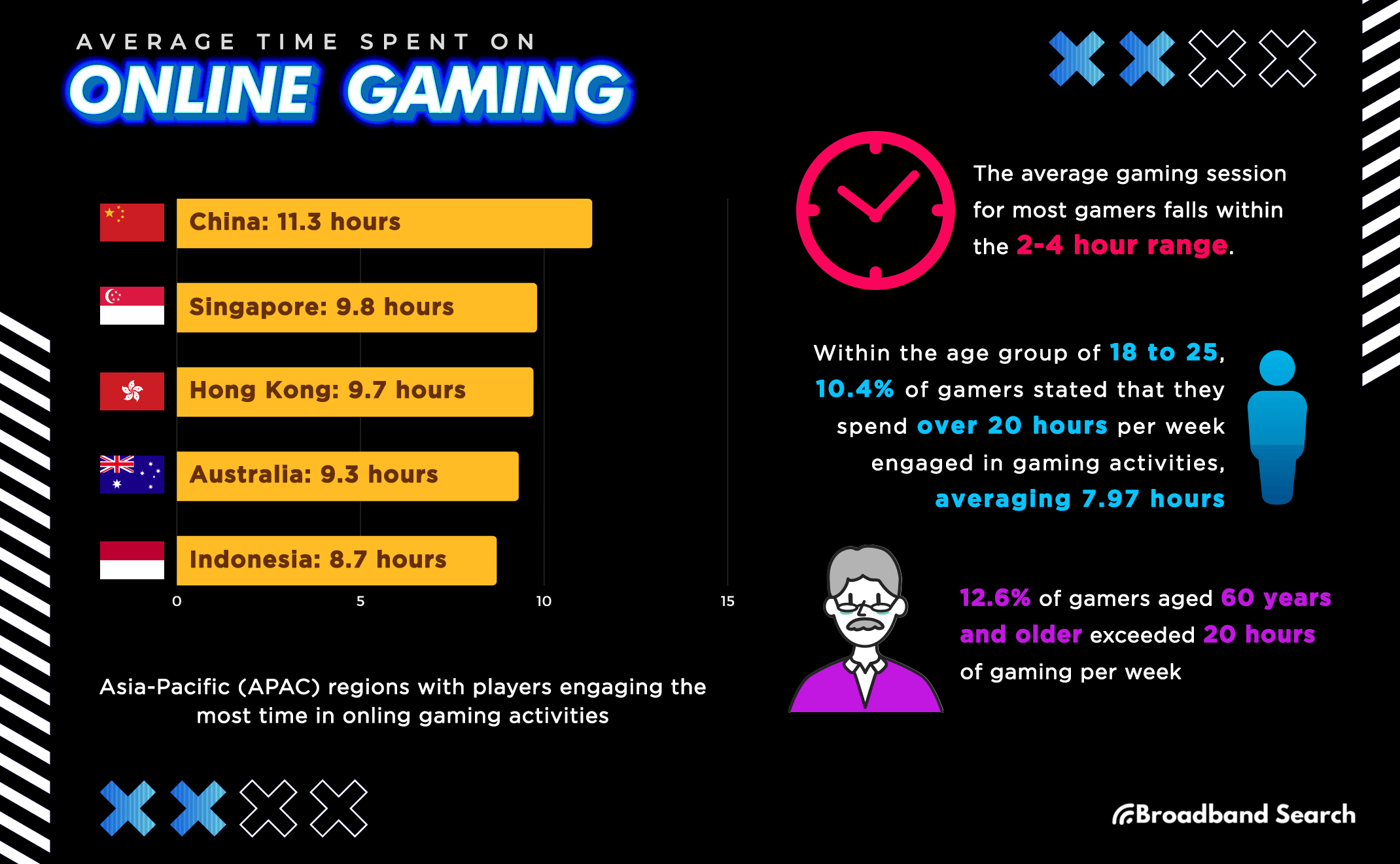
Gaming habits vary widely, but on average, gamers spend about 10 hours per week playing. About 40% of gamers play for 1–5 hours daily. While younger gamers (18-25) have a slightly lower weekly average, a significant portion still play for over 20 hours. Interestingly, a higher percentage of gamers aged 60 and above commit to extended gaming sessions.
What are the peak hours for online gaming?
Peak gaming hours vary by region due to time zones and daily schedules. For many, activity spikes between 8 p.m. and midnight. Among adolescents, 24% continue playing after 9 p.m. Mobile gaming sees a peak between 5 p.m. and 6 p.m., with another surge from 11 a.m. to 5 p.m.
How do peak hours affect the gaming experience?
Peak hours can lead to server congestion and longer matchmaking times. Network delays have a significant impact on player retention. 78% of gamers rage quit due to lag, says Liquid Web study. To combat this, gaming companies invest in optimizing server capacity and developing delay compensation techniques to ensure a smooth experience for all players.
What are the latest trends in online gaming?
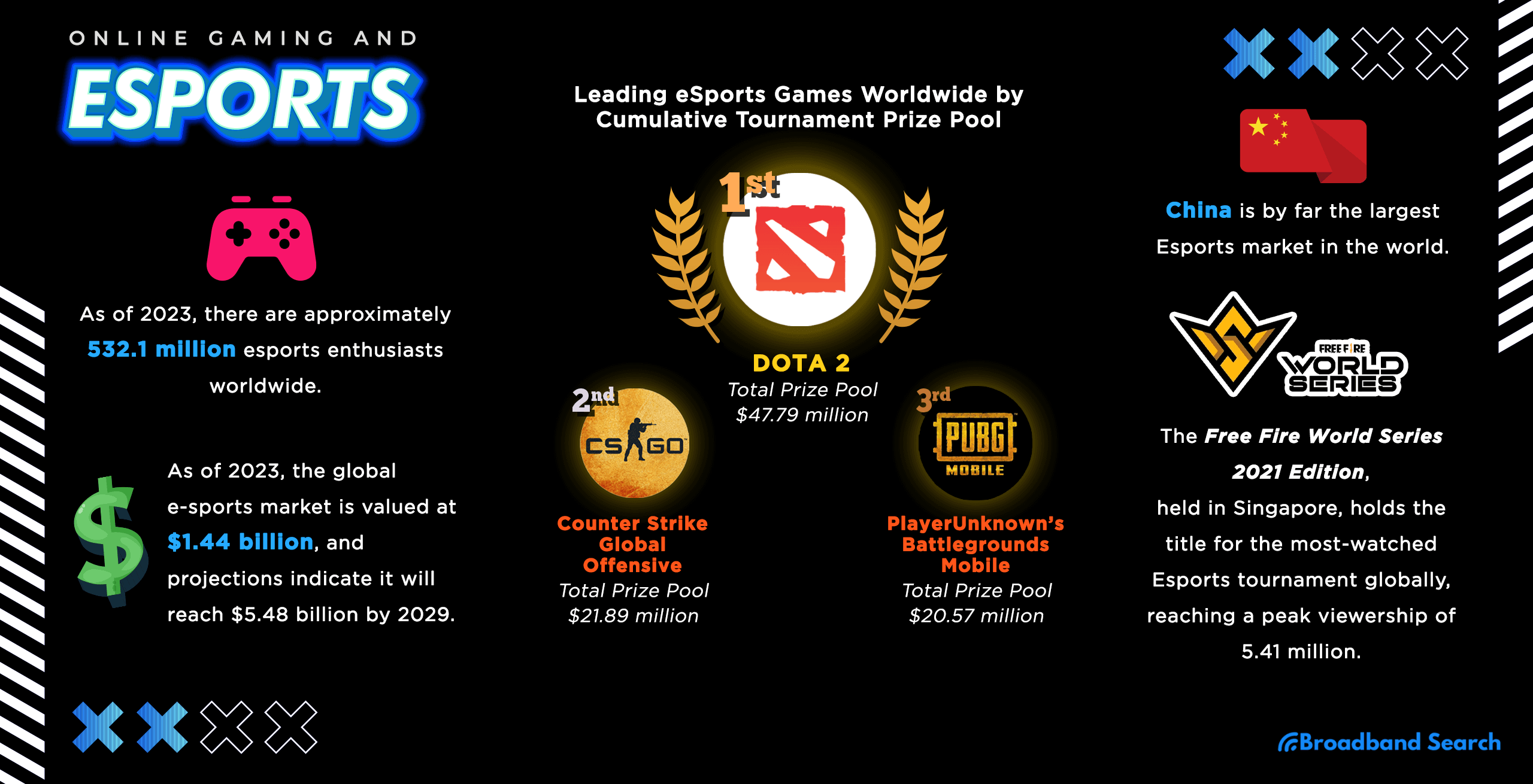
The online gaming industry is constantly evolving, with several key trends shaping its future. The growth of esports continues to be a major driver, with revenue projected to reach $1.79 billion by the end of 2025. Esports content now makes up 28% of all streamed gaming views, turning competitive gaming into a global phenomenon.
In-game purchases and microtransactions have become a primary monetization strategy, with the global market for these purchases expected to reach $117.95 billion by 2027. This includes cosmetic items, downloadable content (DLCs), and loot boxes—randomized rewards that have sparked debate over their resemblance to gambling.
Virtual economies are another significant trend, where in-game items hold real value and can be traded among players. This has led to the rise of secondary markets, but also raises questions about ownership and regulation.
Finally, artificial intelligence (AI) is set to revolutionize the industry. AI is being used to create more dynamic and adaptive game worlds, generate realistic non-player characters (NPCs), and personalize player experiences. From procedural content generation to intelligent matchmaking, AI is making games more immersive and engaging than ever before.
FAQ
Which is more popular: mobile, PC, or console gaming?
Mobile gaming is the most popular platform, thanks to its accessibility and the wide variety of casual games available. However, console and PC gaming still hold significant market share, especially for more immersive, high-fidelity experiences.
How big is the online gaming industry in 2025?
The global online gaming market is projected to reach $225.7 billion in revenue by 2025.
How many gamers are there worldwide, and which regions have the most players?
There are an estimated 3.32 billion gamers worldwide. Asia has the largest number of players with 1.48 billion, followed by Europe with 715 million.
What is cross-play, and which major games support it?
Cross-play allows players on different platforms (like PlayStation, Xbox, and PC) to play together online. Major games that support it include Fortnite, Call of Duty: Warzone 2.0, and Apex Legends.
How do free-to-play games make money?
Free-to-play (F2P) games generate revenue through in-game purchases, also known as microtransactions. Players can buy cosmetic items (like skins), gameplay advantages, or extra content.
Are loot boxes considered gambling?
The debate continues, but many regulatory bodies are examining whether loot boxes—randomized in-game rewards that can be purchased with real money—constitute a form of gambling due to their element of chance.