
Facebook collects a wide variety of personal data about its users from their activity, profile, devices, and outside interactions. The information they gather is used to show you personalized content and targeted ads, power services, and improve products.
The practice of getting and using user data is a major privacy concern. It enables Facebook to build extensive personal profiles of users, including their interests, behaviors, and even sensitive data such as political or religious affiliations, to sell you things.
How Does Facebook Collect Data?
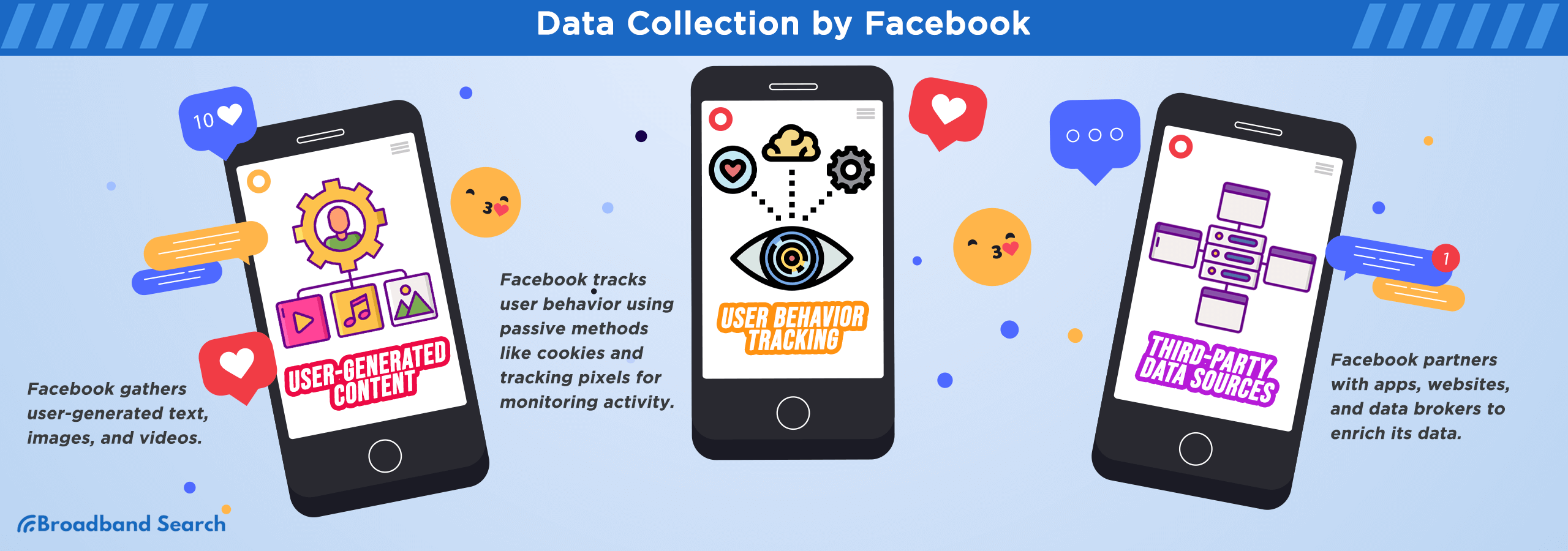
Facebook gathers vast amounts of information about its over 3 billion users through various direct and indirect methods. Beyond what you share publicly, Facebook uses tools to continuously collect data on your activity, both on and off its platform.
- User-generated content: Facebook stores user posts, photos, and videos, leveraging its vast content library to drive high user engagement.
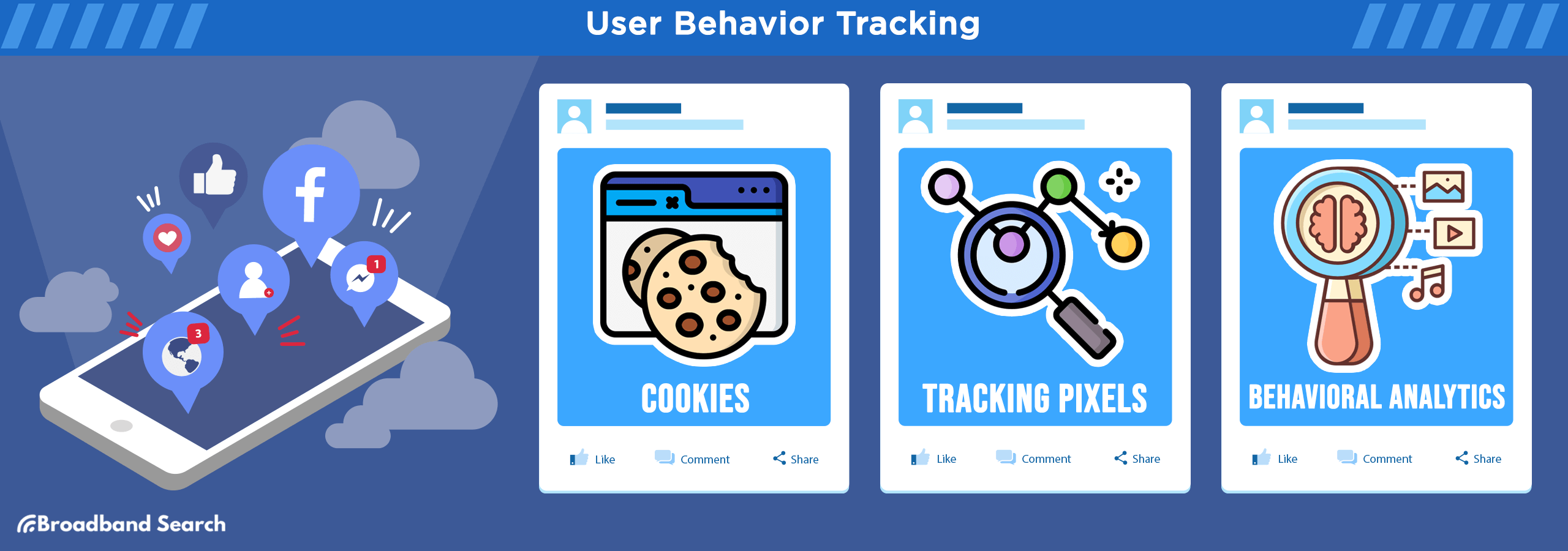
- User behavior tracking: Facebook uses both passive and active tracking to monitor user behavior. Passive tracking uses Facebook tracking cookies and pixels to monitor activity both on and off the Facebook platform, while active tracking focuses only on user interactions within the Facebook app or website.
- Device Location Services: When you grant the Facebook app permission on your phone, it collects precise location data via GPS, Bluetooth, and WiFi signals. Information you voluntarily provide, such as checking in at a restaurant, tagging a location in a post, or listing your current city on your profile, is collected and used.
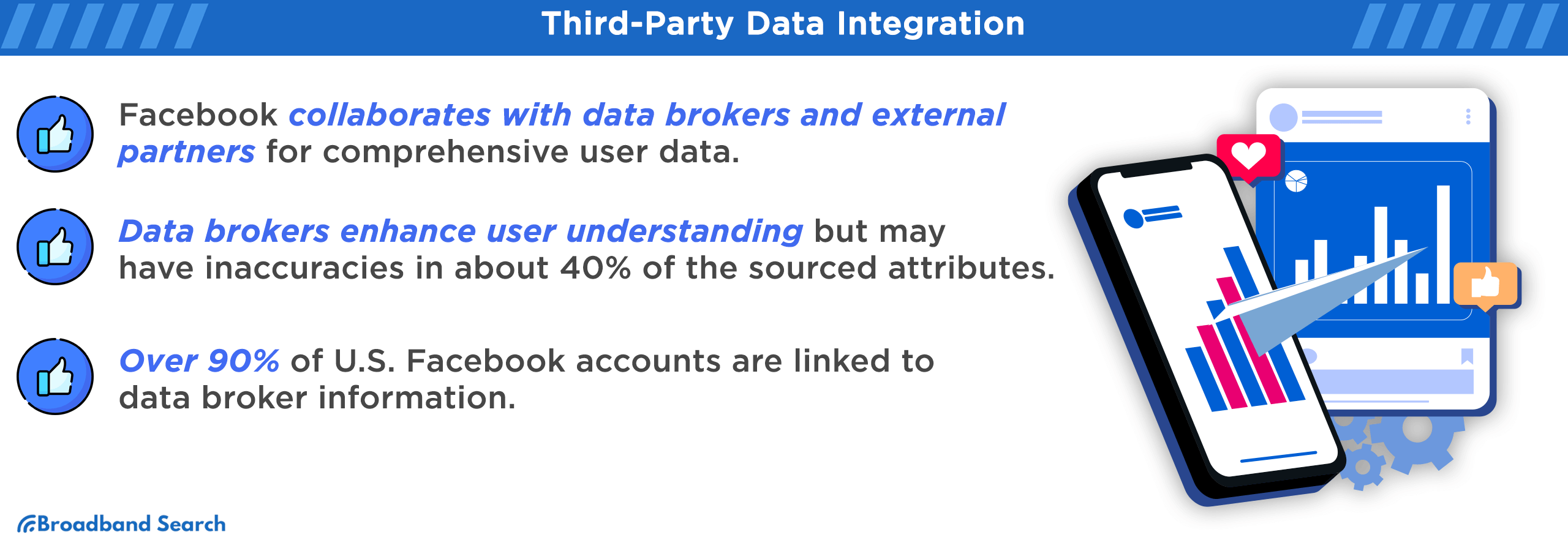
- Third-party integrations: Facebook data collection methods include obtaining additional user data from third-party sources, including apps, other websites, and data brokers.
What Data Does Facebook Collect?
Facebook collects comprehensive personal information on its users, including everything you share on the platform, your interactions with content, and even data gathered from your activity on outside websites and applications.
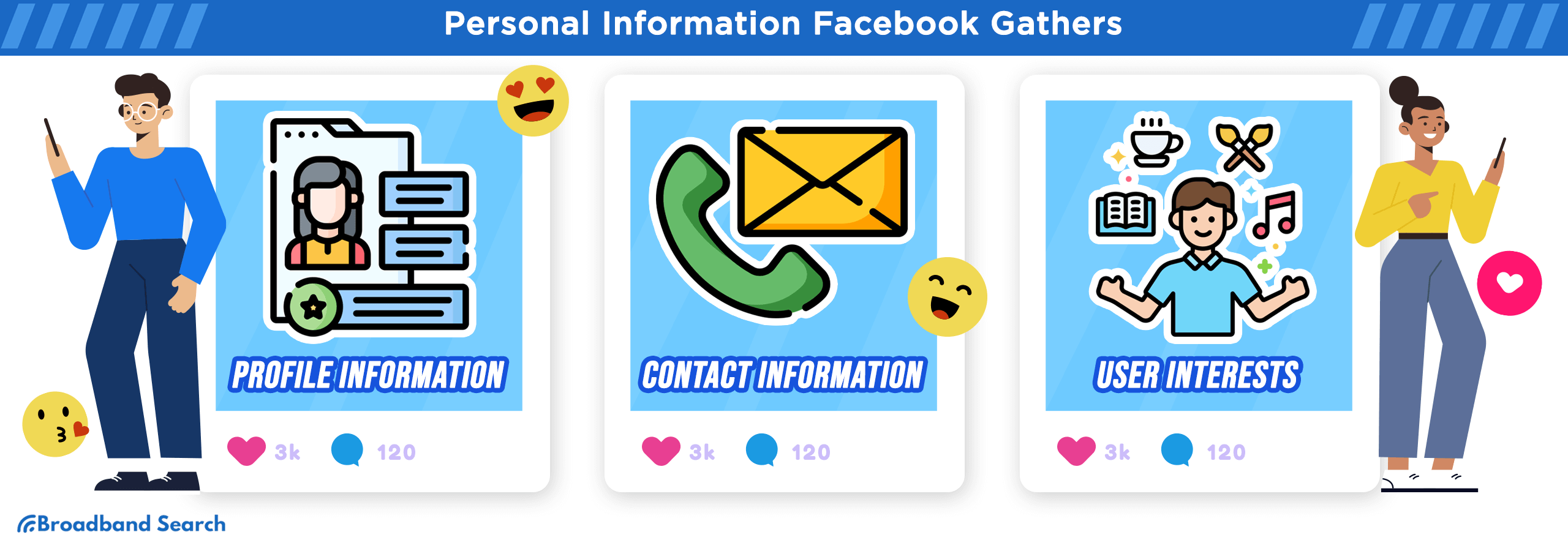
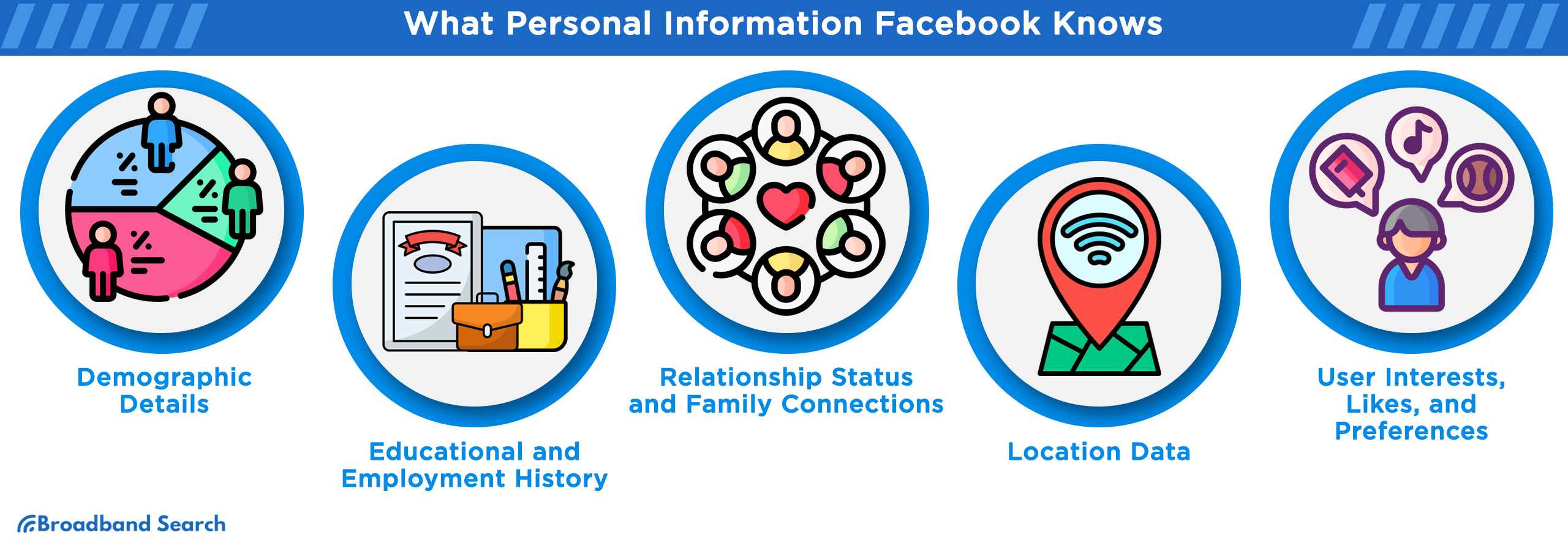
- Profile details: Facebook collects user data—including demographics, education, employment, and relationship status—to power its targeted advertising.
- Contact information: Your phone number or email helps the platform target you with ads and sync your contacts with friends using your Facebook personal information.
- Location data: Facebook combines GPS and IP address data to identify users' locations and serve them targeted advertisements and local content, raising serious Facebook privacy issues. It is particularly effective because most Facebook users access the app on their cell phones,.
- Interests and activity: Facebook collects user data from its platform and external websites. The data gathered includes profile details, content engagement, page likes, group memberships, and websites using the Facebook pixel, allowing advertisers to target based on behavior rather than your interests.
How Much Data Does Facebook Have on You?
According to a Washington Post report, the social media platform collects an average of 90 or more Facebook data points per user, providing insight into their behaviors and preferences. Facebook user data statistics include daily time spent, mobile-first usage, and video engagement.
It is unknown just how much information Facebook has. Its dataset is considered one of the largest in the world due to the size and diversity of its user base, the volume and types of data it collects, and the sheer volume of new data it processes every day. Its parent company, Meta, owns other data-heavy platforms like Instagram, WhatsApp, and Messenger, continually acquiring more data to add to its collection.
How is Data Used for Targeted Advertising?
Targeted advertising leverages vast amounts of consumer data, including demographics, interests, and online behavior, to deliver highly personalized ad content to specific audiences.
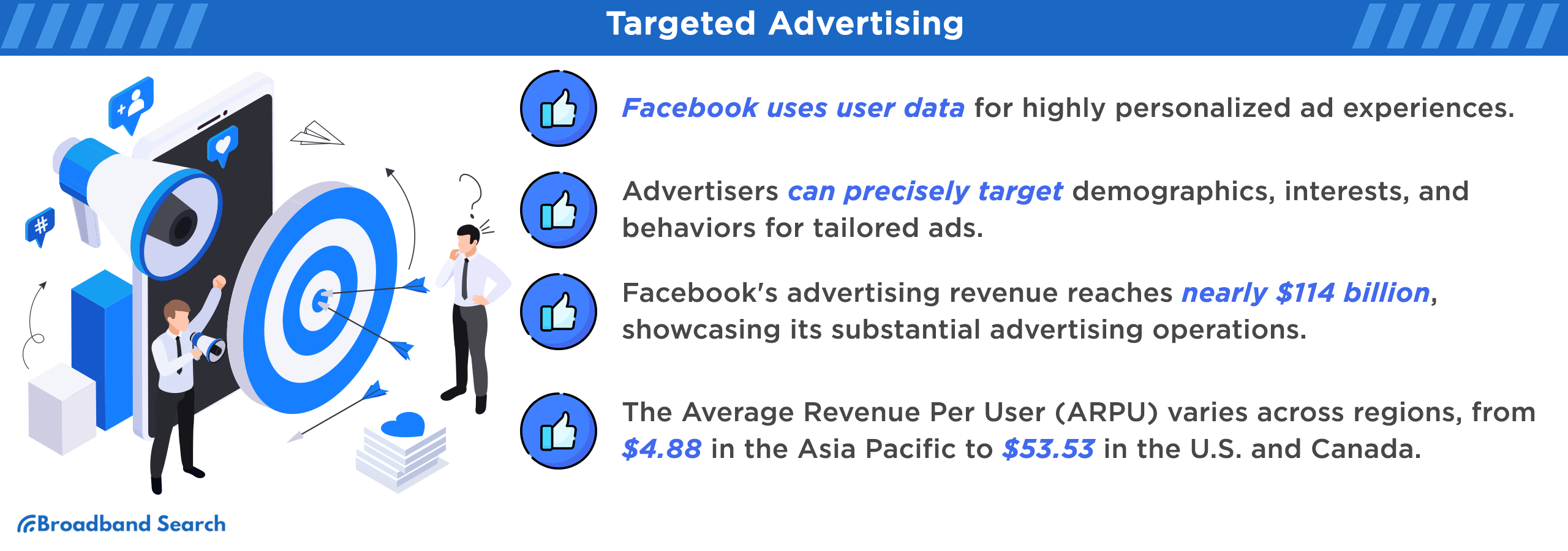
- Personalized ad targeting: How Facebook advertising works is that it uses its massive user data to personalize ads based on demographics, interests, location, and behavior.
- Audience segmentation: Facebook allows advertisers to segment audiences with pinpoint accuracy. Facebook target ads can reach their ideal audience by selecting specific demographics, interests, and behaviors.
- Revenue impact: In recent years, Facebook has consistently earned substantial advertising revenue, generating nearly $114 billion in 2021. However, the average revenue per user (ARPU) varies significantly by region. For example, users in the U.S. and Canada had an ARPU of $53.53, while users in Asia-Pacific had a much lower ARPU of $4.88.
Privacy Concerns and High-Profile Incidents
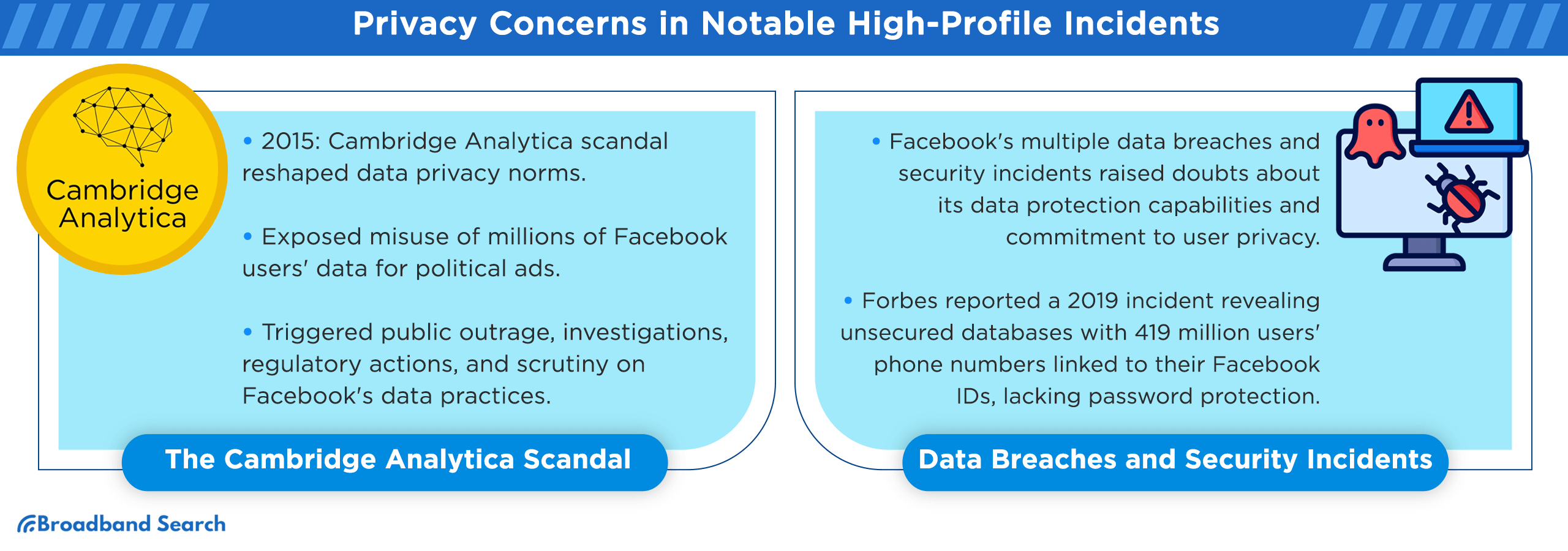
- Cambridge Analytica scandal: The lawsuit, filed on behalf of users with privacy concerns about Facebook, alleged that Meta allowed third parties, including Cambridge Analytica, to access users' private data without their consent. In December 2022, Meta agreed to a $725 million settlement to resolve the class-action lawsuit, but admitted no guilt.
- Data breaches: Facebook's history of neglecting user data security has led to a significant loss of confidence. One instance of a Facebook Data breach occurred in 2019 when an unencrypted database exposed the phone numbers and Facebook IDs of 419 million users.
- Ongoing risks: Facebook users continue to face security threats from data breaches, phishing scams, and the misuse of their personal information by third-party apps and through social engineering.
How Are Users Responding to Facebook's Data Practices?
Users feel differently about Facebook collecting their data; some worry about privacy, others value convenience, and many accept Facebook's intrusive practices.
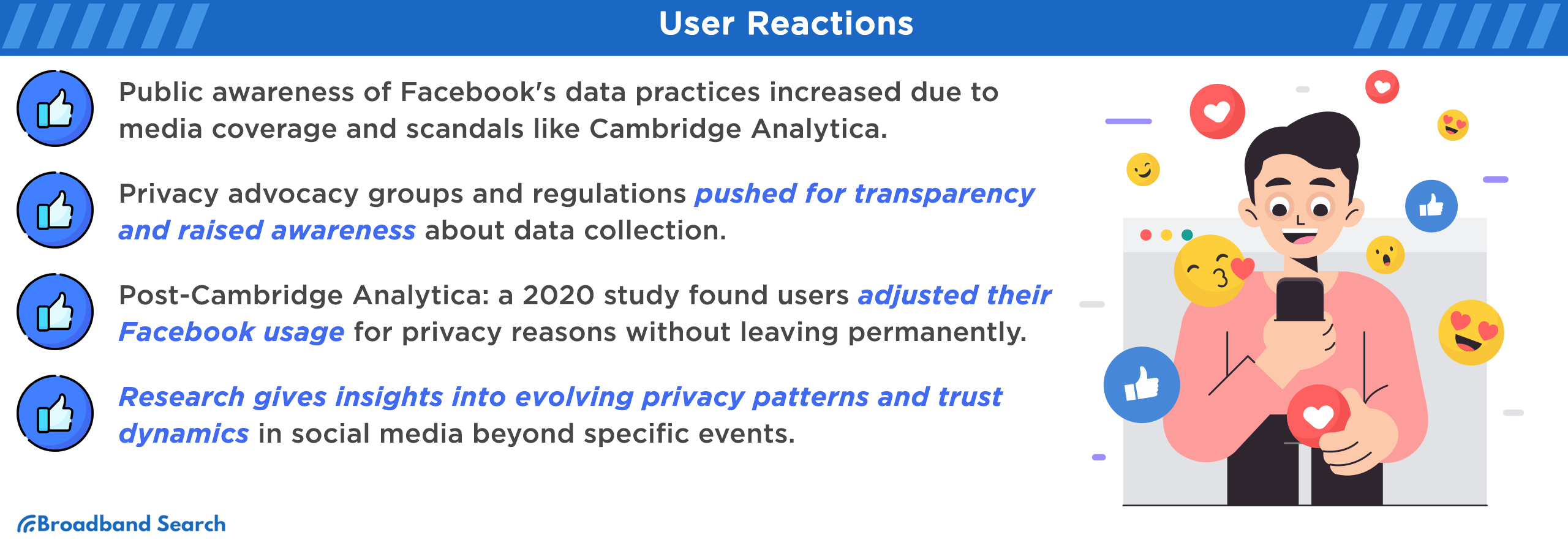
- Public awareness and distrust. The extensive media coverage of data-related scandals, such as Cambridge Analytica, has shone a spotlight on Facebook's data practices and caused many users to rethink their relationship with the platform.
- Changes in user behavior: The social media platform is seeing lower user engagement and more Facebook privacy setting changes as a result of heightened privacy awareness, algorithm shifts, and competition from rival platforms.
- Role of regulations. Facebook's privacy laws have forced the platform to be transparent. GDPR and similar laws require companies like Facebook to be more transparent about their data-handling practices.
How Do I Protect My Privacy on Facebook?
Protecting your privacy on Facebook requires proactive steps to manage the information you share and control how the platform uses your data.
- Review and adjust privacy settings using Facebook settings.
- Limit the personal information you share with or while on Facebook.
- Manage ad preferences and tracking by going to Settings & Privacy > Settings, then select Accounts Center > Ad preferences to adjust topics and data usage.
- Use third-party privacy tools such as the Electronic Frontier Foundation's Privacy Badger and uBlock Origin for Facebook data protection.
Facebook User Data: Awareness and Prevention to Protect Your Data Privacy
Facebook's extensive data collection methods involve building comprehensive user profiles for targeted advertising. The gathering of private information extends beyond what users explicitly post, including GPS data, contact information, and browsing activity collected through tracking technologies like cookies and pixels.
Facebook's data collection poses serious risks, including data breaches that enable identity theft, cyberstalking, misuse of personal information for targeted advertising, and political profiling.
As a Facebook user, it is vital to stay informed about data policies and evolving technology, adjust your settings, and practice responsible sharing to protect your reputation and others' privacy.
FAQ
Does Facebook sell my personal data?
No, Facebook explains in its data policy that it does not sell your personal data to third parties. Instead of selling data, Facebook's business model involves allowing advertisers to pay to show targeted ads to specific groups of users based on the extensive data it collects internally.
Can I stop Facebook from tracking me off-site?
Yes, you can take steps to limit and manage the data Facebook collects about your activity on other websites and apps using the "Your activity off Meta technologies" setting.
How accurate are my "interests"?
Facebook's interests are a mix of accurate observations and educated guesses, but they are often partially inaccurate or irrelevant. While the system successfully identifies some of your genuine interests based on your activity, studies suggest a significant portion of them are wrong.
Can advertisers see my identity?
No, advertisers on Facebook cannot see your personal identity. Facebook's system is designed to protect your specific identity while still allowing advertisers to reach you based on the characteristics you share with a large group of people.
Is location tracking required?
No, precise location tracking is not required for Facebook to function, and you can disable it in your device settings. However, even with location services turned off, Facebook can still estimate your general location (city or zip code level) using other information, such as your IP address, WiFi connections, check-ins, and the current city listed on your profile.