
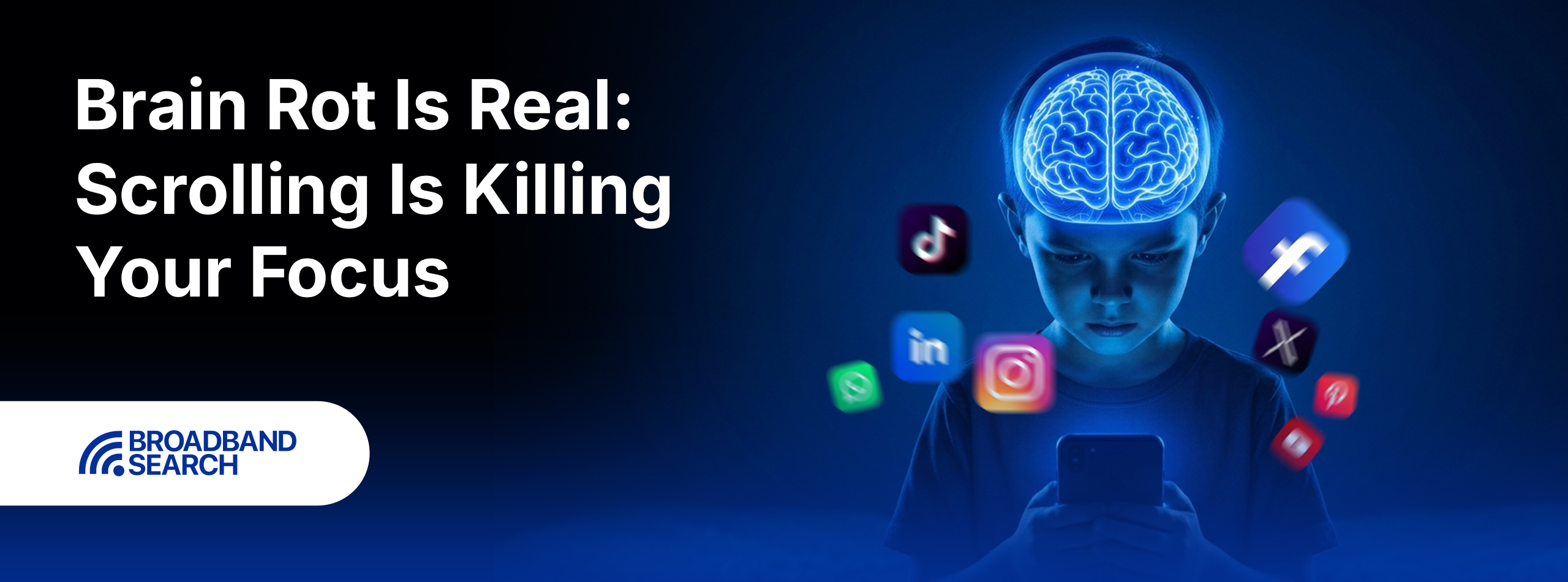
You’ve probably heard the term brain rot thrown around on TikTok or X (formerly Twitter). Maybe you’ve even felt it yourself. That fuzzy, drained feeling after spending hours scrolling through short-form videos without retaining a single thing.
It became so prevalent that "brain rot" was named the Oxford Word of the Year for 2024. But as we move further into 2026, the conversation is shifting from what it is to how we fix it.
In this guide, we’ll explore what brain rot actually means, how meme culture contributes to it, and how you can build a healthier relationship with your screen time.
Key Takeaways
- Brain rot isn't new: The term dates back to 1854, but today it refers to mental exhaustion from consuming low-quality digital content.
- Cognitive impact: Excessive "doomscrolling" and media multitasking can impair working memory and increase anxiety.
- Meme culture plays a role: While funny, the rapid consumption of "brain rot memes" encourages shallow attention spans.
- You can reverse it: Simple digital hygiene, like managing notifications and setting screen time limits can restore mental clarity.
What is Brain Rot?
Brain rot is a nuanced term that describes both a cause and an effect. It refers to the consumption of low-value digital content—such as repetitive memes or "sludge" videos—as well as the resulting state of mental exhaustion and cognitive fogginess.
It is the outcome of "doomscrolling," where users endlessly scan social media for mindless entertainment or negative news, creating a cycle of consumption that feels impossible to break.
It’s Older Than You Think
While we associate brain rot examples with Gen Z and Gen Alpha slang, the concept dates back to 1854. In his famous book Walden, Henry David Thoreau warned against society favoring simple, shallow gossip over complex, meaningful ideas.
With internet speeds faster than ever, brain rot is amplified because we have access to an infinite stream of information, making it harder to look away.
The Psychological and Cognitive Impact
Brain rot isn't just a feeling; it has measurable effects on how our minds work. When we constantly switch between apps, videos, and notifications, we aren't truly multitasking. We are "task switching," and it comes at a cost.
The "Switch Cost"
According to research published by the NIH, task switching can reduce productivity by up to 40%. Every time you switch your focus from a work email to a meme, your brain has to recalibrate. This leads to:
- Reduced Attention Span: Difficulty focusing on long-form content like movies or books.
- Executive Function Challenges: Trouble planning tasks or regulating emotions.
- Emotional Fatigue: Higher rates of anxiety and depression are linked to heavy social media use.
The Hidden Cost of Multitasking
Activity | Impact on Productivity |
Single-tasking (Deep Focus) | Near-maximum efficiency |
Light task switching (2 tasks) | Noticeable efficiency loss |
Frequent task switching (3+ tasks) | Up to 40% productivity loss |
Source: Psychology Today
Note: Multitasking increases cognitive load, leading to higher stress and lower retention.
Digital Behaviors Driving Brain Rot
Social media platforms are engineered to keep you engaged through dopamine-driven feedback loops and endless-scroll design patterns.
What is Dopamine?
Dopamine is a neurotransmitter; a chemical messenger in your brain that plays a major role in how we feel pleasure and motivation. It’s often called the "feel-good" chemical. When you see something you like, your brain releases dopamine, which makes you want to repeat the behavior.
This creates a "feedback loop" where you keep scrolling to chase the next hit of dopamine. Over time, your brain gets used to these high levels of stimulation, making slower, less stimulating activities like reading a book, feel boring or difficult.
- Algorithmic Feeds: Platforms like TikTok and Instagram Reels serve content based on what keeps you watching, not what makes you feel good.
- Passive Consumption: Unlike playing a video game or reading, brain rot images and videos are often consumed passively, requiring zero mental effort.
- The Saturation Point: According to eMarketer's 2025 forecast, U.S. adults are nearing a "saturation point" for media consumption, yet time spent on digital video continues to rise by about 9 minutes per day.
The Rise of Meme Culture
Memes are the language of the internet. They are bite-sized, culturally relevant, and humorous. However, the sheer volume of brain rot memes (content that is absurd, nonsensical, or repetitive) can accelerate mental fatigue.
How Memes Affect Attention
- Brevity: Memes strip away context, training our brains to expect instant gratification.
- Repetition: Seeing the same meme format hundreds of times (viral trends) creates a "zombie scrolling" effect where we consume without processing.
- Visual Overload: High-contrast, rapidly-edited videos overstimulate the visual cortex.
Examples of Brain Rot in Online Culture
If you are looking for brain rot examples, you don't have to look far. The current digital landscape is filled with content designed to hook you instantly:
- Sludge Content: Split-screen videos with a clip of a TV show on top and a mindless mobile game or satisfying sand-cutting video on the bottom.
- Nonsense Vocabulary: Slang terms that originate on TikTok and flood comment sections, can drown out meaningfulrendering conversations.
- Micro-Trends: Fashion or lifestyle trends that last for short periods of time before being replaced by the next big thing.
What Are the Signs of Brain Rot?
How do you know if you are experiencing brain rot? Look out for these common signs:
- Loss of Focus: You struggle to watch a movie or read an article without checking your phone.
- Chronic Boredom: You feel restless or under-stimulated whenever you aren't looking at a screen.
- Brain Fog: You find it hard to think clearly, recall information, or articulate your thoughts.
- Sleep Disruption: You stay up late scrolling despite feeling tired, or reach for your phone the moment you wake up.
Mitigation Strategies: How to Stop the Rot
You don't need to delete all your apps to avoid brain rot. It’s about quality over quantity.
Just as you brush your teeth, you need to clean up your digital intake. Unfollow accounts that make you feel anxious or drained. Use tools to block brain rot images or keywords that trigger doomscrolling.
For every 20 minutes of screen time, look at something 20 feet away for 20 seconds. This reduces eye strain and breaks the trance of the scroll.
3. Prioritize High-Quality Connection
Instead of mindlessly scrolling on a spotty connection, use BroadbandSearch to help you find quality internet, so you can truly engage in meaningful digital activities. Stream a documentary in 4K, video call a friend without lag, or play a strategy game that engages your brain.
By choosing better internet, you can replace the frustration of buffering and the boredom of scrolling with enriching experiences that actually exercise your brain.
Healthy vs. Brain Rot Digital Habits
Habit | Brain Rot Behavior | Healthy Digital Habit |
Video | Scrolling Shorts/Reels for 2 hours | Watching 1 movie or documentary |
Social | Lurking/Reading arguments | Video calling a friend or family member |
Gaming | Mindless "clicker" mobile games | Strategy or puzzle games |
Timing | Late-night doomscrolling | Scheduled screen-free hours |
Have Fun but Remember to Be Mindful
The internet is an incredible tool, but it requires mindful usage. As we navigate 2026, the goal isn't to disconnect entirely, but to connect with purpose. By understanding the mechanics of brain rot, we can choose to consume content that enriches us rather than drains us.
Ready to upgrade your digital experience? BroadbandSearch makes it easier to find internet to enjoy your online content mindfully.
FAQ
What is brain rot?
Brain rot is a term describing the mental fog and cognitive fatigue caused by excessive consumption of low-value digital content, such as short-form videos and repetitive memes.
Are brain rot memes harmful?
n moderation, no. However, overconsumption of brain rot memes can shorten attention spans and contribute to anxiety by replacing meaningful mental engagement with quick dopamine hits.
Can brain rot be reversed?
Yes. By setting screen time limits, engaging in "deep work" (focused tasks without distraction), and prioritizing offline hobbies, you can restore your attention span and cognitive function.
What are some brain rot examples online?
Common examples include "sludge content" (split-screen sensory videos), endless doomscrolling through negative news, and engaging with nonsensical viral trends that lack context or meaning.